Installation Date : April 2024 Contact Person: Arnoud van der Vaart Client: Gemeente Amsterdam Location: Amsterdam Central, Amsterdam
Project: Solving the Urban Plastic Soup
Urban plastic waste is a major source of plastic pollution in rivers and oceans. This project focuses on addressing the economic, socio-economic, and environmental impacts of this pollution.44
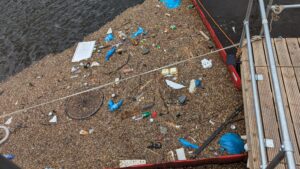
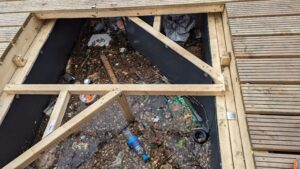
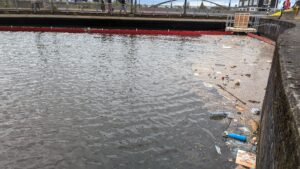
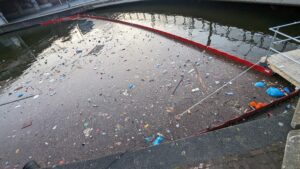
In Amsterdam, plastic waste seeps from the canals and the IJ into the sea and coastal areas. The economic consequences are significant; cleaning up litter is an ever-growing expense for the city and region. Every day, cleaners remove around 3,500 kilograms of plastic from Amsterdam’s city center. In addition, dredging and removing floating or bulky waste from the waterways costs the city approximately €3.2 million per year.
Beyond these direct costs, the broader socio-economic and environmental effects of urban plastic pollution, such as biodiversity loss, damage to vessels and infrastructure, and disruption of navigation, remain partially understood.
Goal for CanalCleaner
Following the successful installation of the CanalCleaner in the Municipality of Delft, a new chapter begins with our sustainable solution in Amsterdam. As part of the city’s SESA program, Noria’s CanalCleaner was installed in the summer of 2024 at a key location in the capital.
The goal of the system is to capture plastic flows before they leave the city of Amsterdam. This cost-effective solution ultimately helps prevent plastics from reaching the North Sea. Collecting plastic at the Oostertoegang forms part of the four-year project “Solving the Urban Plastic Soup”, a major initiative to reduce plastic pollution in the heart of the Netherlands.
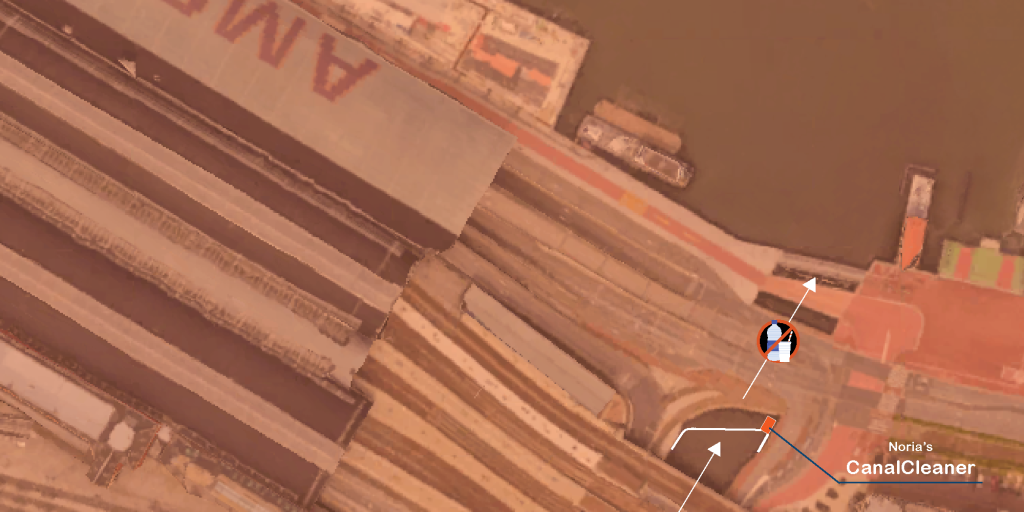
Location: Oostertoegang, Amsterdam Centraal
The Oostertoegang is one of the seven main exits for plastic waste leaving the city of Amsterdam. During the demonstration phase, the CanalCleaner will completely close this route to prevent litter from reaching the North Sea.
How Noria tackles the problem of plastic pollution?
Want to know more?
Would you like more information about our projects, or are you curious about what Noria can do for you in your area? Email us at .
 .
.