


Microsampler

A simple way to map microplastics 

Microplastics are an increasing concern. To measure the amount and type of microplastics in open inland waters, Noria has developed a simple yet effective tool: the MicroSampler. 

Microplastics are everywhere: in water, on land, in the air, and even inside animals and humans. The term refers to very small plastic particles that hardly degrade over time, raising growing concerns about the damage they may cause. 

How does the MicroSampler work?

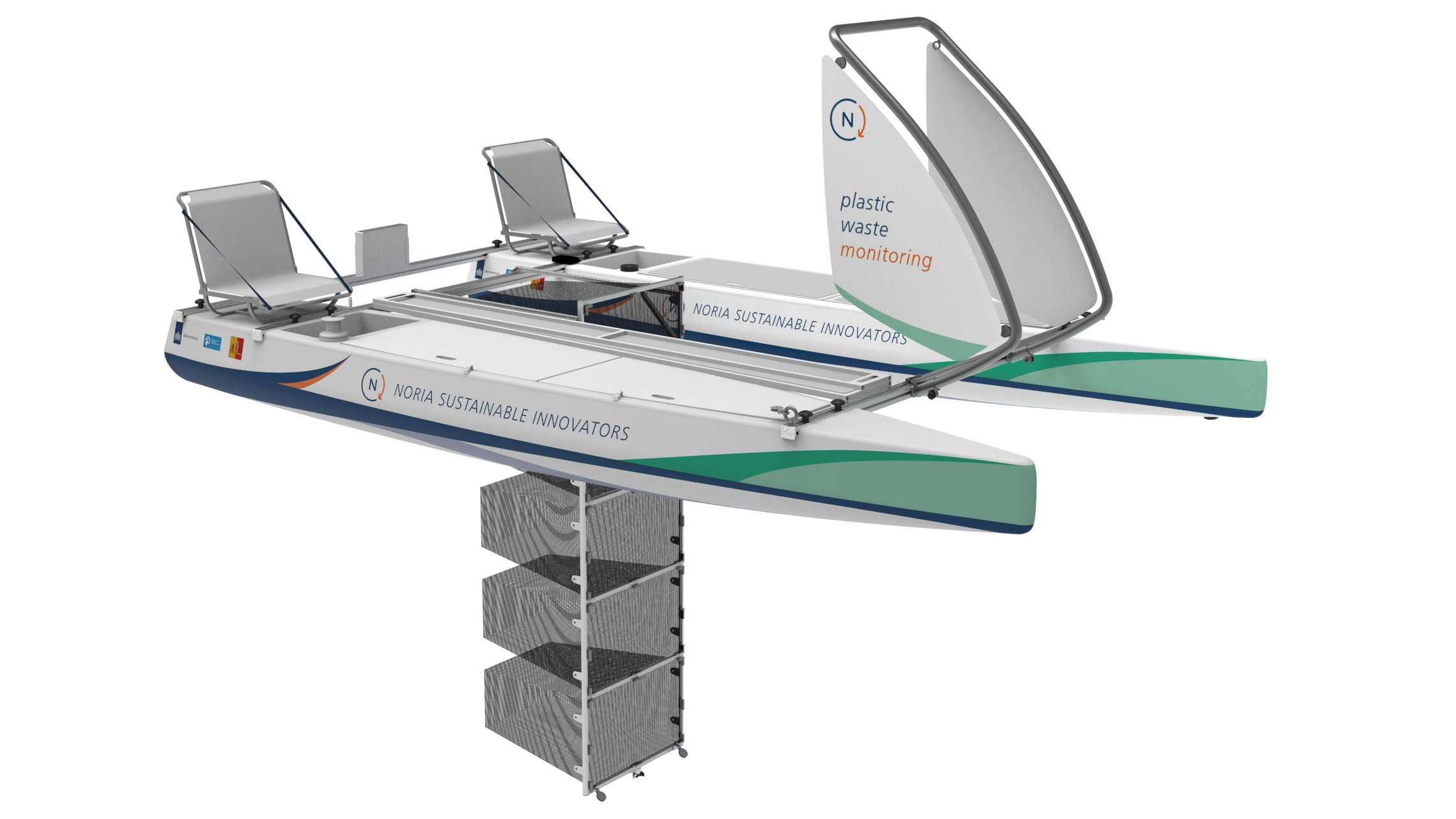
The MicroSampler consists of a smartly designed net system mounted between two catamaran floats. Thanks to its shape, it can collect microplastics as small as 300 micrometers, and the net size can be adjusted for each measurement. The catamaran design ensures minimal disturbance to the water flow, resulting in more accurate sampling. Samples are analysed in collaboration with a specialized laboratory. 

The MicroSampler can be deployed in canals, harbors, urban waterways, and larger inland waters. After an environmental assessment, several suitable sampling locations are selected in consultation with the client, along with the desired sampling frequency. The laboratory analysis provides insight into the amount and types of microplastics present (e.g., PET, PP), and can also reveal potential sources such as industrial pellets, macroplastics, agricultural films, car tires, or fishing gear. 

How to sample, monitor and analyze the microplastic pollution
Sampling and analysing the microplastic from river and canal water

What are microplastics?

Microplastics are plastic particles smaller than 5 millimeters, often invisible to the naked eye. They are categorized as primary or secondary: 

  • Primary microplastics are intentionally produced in small form, for example as microbeads in cosmetics (like scrubs or toothpaste) or as plastic pellets used in manufacturing new plastic products. 
  • Secondary microplastics result from the breakdown or abrasion of larger plastic objects, such as litter degradation in water, tire wear, textile fibres released during washing, or paint erosion. 

Why are microplastics a problem?

Microplastics enter the bodies of humans and animals in many ways. While the exact health effects are still under investigation, growing evidence suggests they may be harmful due to their persistence and ability to accumulate. Ongoing research aims to better understand the impact of different microplastic types on ecosystems and health. 

how does the plastic degrade, disintegrate or decomposs into microplastic
MACROPLASTIC
>20mm
MESOPLASTIC
5-10mm
MICROPLASTIC
<5mm
NANOPLASTIC
<0,2mm

How do we measure microplastics?

The MicroSampler catamaran is made of two floats connected by a precision-designed net system. Its hydrodynamic design minimizes water disturbance, ensuring reliable sampling results. The standard nets capture particles down to 300 µm, but other mesh sizes can be used if needed. 

Samples are analysed in partnership with accredited laboratories using microscopic examination and advanced analytical techniques to determine size, shape, polymer type, and concentration. 

Main sources of microplastics

Primary sources

Primary microplastics enter the environment directly as small plastic particles, often through wastewater treatment plantsillegal discharges, or industrial spills. They are mainly produced for commercial purposes and can be found in cosmetics (e.g., toothpaste, scrubs, personal care products) or as industrial pellets used for plastic manufacturing. 

Secondary sources

Secondary microplastics result from the degradation of larger plastics. These particles originate from the wear and tear of products during production or use, such as tire abrasionsynthetic textile fibers released during washing (Royal Society of Chemistry, sd), or fragmentation of plastic litter in the environment.

Would you like to know more?

Would you like more information about microplastic measurements or are you curious about what Noria can do for you in your area? Email us at .